

Precision Oral Surgery and Implants
How Can You Know If Surgery Is Required to Remove Your Wisdom Teeth?

Wisdom tooth extraction is typically recommended if your wisdom teeth don’t have enough space to grow out properly. The issue can be that the growth will become painful and distorted, and that it can also lead to secondary problems such as food being trapped behind your wisdom teeth and leading to decay and infection, as well as the possible onset of gum disease.
Because wisdom tooth extractions can carry certain risks if not performed correctly, the safest option considered is to have it done as an outpatient surgery with Highland Park wisdom tooth removal surgeons. This means you will have to go home the same day as when the surgery is performed, and the anesthetic used will not be that powerful.
For that purpose, you’ll have to prepare ahead of time. Make sure you ask your dentist how many wisdom teeth have to be removed and how long the surgery is expected to last. Ask if you should have someone there to drive you home, and inquire about any risks that you should be aware of, such as damage to other teeth or the onset of mild nerve damage.
Being informed about these issues is highly essential, and your dentist will be obliged to answer all your questions. In most cases, however, you’ll find that the procedure will go very smoothly, and you’ll be back in action in no time.
Is Oral Surgery Typically Treated as an Out Patient Surgery?

Outpatient surgeries are typically associated with dental procedures, simply because these are not serious enough to be treated with a type of anesthetic that would require you to be hospitalized overnight. At the same time, while some procedures are mild enough to be used along with local anesthetics that simply numb a certain area of your gums, complex procedures such as smile restoration will require outpatient anesthesia as mandatory.
The reason why oral surgery is typically treated as out patient is because the main goal is to eliminate pain. The surgeries themselves are rarely invasive, complicated or long lasting enough to warrant anything stronger than light IV sedation, which means you won’t have to be kept overnight.
Of course, the aftereffects of a strong anesthetic will be felt for quite some time after the procedure is done. You will be required to refrain from driving or managing any important tasks for hours to come. Even when you get home, it’s very likely that you’ll end up falling asleep, although that’s not always a rule.
Treating most types of oral surgeries and Park Ridge dental implants as outpatient surgeries is currently considered the norm, and it’s not likely that it will change any time soon. If you want to find out more, contact your dentist and ask your questions, as they will be more than happy to provide you with all the answers you require.
Evaluating the Costs of Going to the Dentist – How Expensive Will Your Oral Surgery Be?

Finding an oral surgeon is not that difficult. With the internet at your disposal and references from your family doctor and dentist, you might be able to find an expert that does an excellent job. The question is whether you can afford it. There are countless stories about how expensive getting your teeth done can be, but the fact of the matter is that costs are not all that high, especially if you do a bit of work to locate a dental surgeon who works at lower costs as well.
The price of oral surgery can be pretty steep if you need something a little fancier. However, if you just want a basic wisdom tooth removal Highland Park offices provide along with the removal of gum tissue or bone, the price will be somewhere between $250 and $400. Compared to a regular tooth extraction, which is at most $250, the price is not that bad.
If you need help with a more complex procedure, such as wisdom teeth removal, then you might need to pay a little more. The cost in that case can go up to about $500, and it might cost more if there are any complications that also have to be taken into account. In general, the more complicated the surgery, the more money it will cost. Fortunately, the total cost won’t be much higher, as the price of a basic checkup is right around $75, and you can get a common, small x-ray at a price no greater than about $30.
What Are the Main Types of Dental Implants Available?
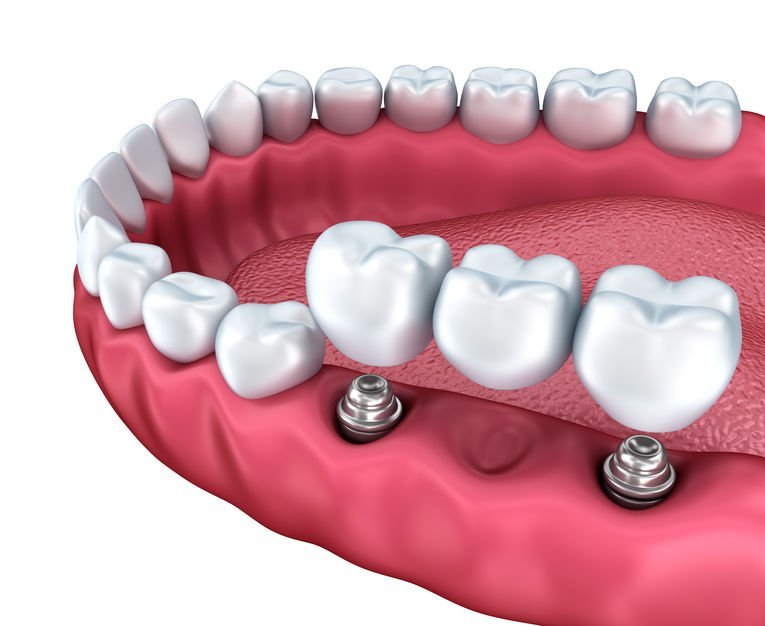
Getting dental implants is a big decision, and it can require careful consideration. In many cases, it has a lot to do with aesthetics, but it’s also based on functional procedures designed to aid in oral health and not just give you a great smile.
That being said, there are three major types of Chicago dental implants that are worth mentioning:
- Endosteal implants are considered the most common types of implants. They act as placeholders for teeth, and are inserted into the jaw to fuse together over time and create a strong foundation for your fake teeth to be supported on. These types of implants can be installed without much difficulty, but they require precision and a long recovery time.
- Subperiosteal don’t require being placed into the jawbone. They are placed above it, but still inside the gum, which some might say is somewhat less resilient of a solution. However, it’s also a good option for someone who wants to avoid invasive procedures.
- Zygomatic implants are less common than the other two since they require a more complex procedure. These implants are only used if you don’t have enough jawbone to support the other two kinds. The reason for the difficulty of the procedure is that the implant uses the cheekbone rather than the jawbone.
Learning More About Important Dental Issues: What Are Impacted Wisdom Teeth?

There are probably a lot of dental conditions that most people don’t even hear about except once in a while, but that doesn’t mean that they should be ignored. On the contrary, the most serious dental problems should be kept track of, and it’s important to take all the necessary steps towards preventing or dealing with them.
Having impacted wisdom teeth is one of those issues that some people want to ignore, but that your dentist will definitely advise you to address sooner rather than later. In the case of impacted wisdom teeth, the third set of molars that grow sometime during the late teenage years can’t emerge properly because of a lack of space. As a result, their growth might be shortened, and their position and orientation might become a problem. Pain and decay might ensue, and the blocked wisdom teeth can affect other nearby teeth as well, leading to serious dental conditions down the line, and a need to visit Park Ridge wisdom tooth removal specialists.
If you notice jaw pain, tenderness, swollen gums and bad breath, as well as any difficulty in opening your mouth properly during the time your wisdom teeth are growing out, chances are you have impacted wisdom teeth. Fortunately, upon the simple extraction of your wisdom teeth, the problem will go away entirely, and you can get on with your life.
Can You Keep Your Wisdom Teeth and Is It Actually a Good Idea?

Even though dentists usually recommend the removal of wisdom teeth, that’s not necessarily a rule. In many cases, you can retain your wisdom teeth as long as they are healthy and they don’t hinder your oral health and your appearance. Otherwise, your dentist will likely recommend you to an oral surgeon who can help you with the procedure.
Cases when wisdom teeth are retained are rare, but they do occur. The most common scenario is that the dentist did recommend removing the teeth, but the patient didn’t have the time and resources to go and have it done, and they may have postponed the procedure at least on a temporary basis, since those sets of teeth are way in the back and their decay isn’t usually immediately noticeable.
Other cases might involve the dentist actually doing a thorough checkup and recommending that the patient keep their wisdom teeth but use carefully selected oral hygiene products and methods to keep them free of unwanted food particles and bacteria.
If your dentist recommends you for wisdom teeth removal, your best choice is to get a referral for a dependable oral surgeon from such as wisdom tooth extraction Buffalo Grove has to offer, make an appointment, and have the procedure done as soon as possible.
When Is Tooth Extraction Necessary and Why Would You Need It?

While sometimes a cleaning and a filling will do, tooth extractions might be necessary if your tooth is too far gone. Decay and cavities are the main villains here, and you need to take care to prevent them from taking hold too much. Failing to do so will almost always lead to the need for removing the tooth and replacing it with dentures or an implant.
The idea behind tooth extraction is to prevent the cavities from affecting surrounding teeth and gums and causing complications and additional problems to take hold. Sometimes dentists might recommend extraction simply as a precautionary measures, while other times you might reach a point where your tooth simply has to be removed.
The latter involves cases when the problem can no longer be solved in any other way, and either a simple or surgical extraction is necessary. While simple extractions can be performed within minutes by a regular dentist, surgical extractions require the presence of a licensed oral surgeon who can handle the complexity of the procedure more efficiently.
Sometimes extractions are not entirely necessary, but they might be recommended, and the procedure is a more difficult one. This is the case with the removal of wisdom teeth, which always warrants the services of an accomplished oral surgeon found here https://www.precisionosi.com/contact-us/buffalo-grove-office/.
What Is an Oral Surgeon Supposed to Help You with?

Visiting your dentist can bring bad news sometimes. You might be suffering from an issue that requires a surgery, or your wisdom teeth might simply have emerged and you need to get them removed. These and many other issues can be resolved with a visit to a reliable oral surgeon.
An oral surgeon is, as the name would suggest, a dental professional who handles surgeries. Like a regular surgeon, they use anesthetic to partially or completely knock you out, or just to numb the pain, and then they proceed with the surgery as planned. In many cases, dental surgeries require more than an hour of work, and then a lengthy recovery period during which you can’t eat certain foods, and in the beginning you might even feel drowsy or out of it because of the anesthetic. However, the advantage is that the surgical intervention helped remove the problem entirely, so you no longer have to worry about it.
Dental surgeons aren’t always required for mild procedures such as removing a tooth or applying a filling. However, they might be required for procedures involving the removal of a root, the setup of a dental implant from a dental implant surgeon Park Ridge offers or various types of surgeries intended to help improve your smile or align your teeth.
Why Do Wisdom Teeth Need to Be Removed as Soon as They Grow Out?

Wisdom teeth might be natural, but that doesn’t mean you have to live with them. According to a lot of dental experts, wisdom teeth are essentially a third set of molars that starts to grow out when you’ve passed your teen years. These teeth are unique in that they grow at the back, behind your regular teeth, and the growth can be abnormally painful or discomforting in some situations.
The pain is why some people decide to remove their wisdom teeth. Also, the distortions that they might cause could influence your facial features to develop differently and in a less symmetrical way. Also, in some cases, wisdom teeth only emerge partially from beneath the gums, or sometimes they don’t emerge at all. Having a set of sharp teeth right below the surface of your gums can cause a lot of issues, and the partial growth can end up trapping food particles that would lead to greater decay and deterioration of your teeth over time.
Not all wisdom teeth have to be removed, of course. In fact, many dentists believe that if the teeth have grown out to be healthy, painless, symmetrical and completely exposed from under your gums, so that they can effectively be cleaned using normal dental hygiene practices, then there should be no issue. It is best to check with professionals like Buffalo Grove wisdom tooth removal offices and see if you need wisdom tooth removal.
When to Fix Your Teeth: Who Should Get Dental Implants and Why?

The prospect of getting dental implants might differ in the case of each person. While for some it’s the ideal choice, others will have to ponder it more carefully and stay in communication with their dentist about the issue. The following tips should help you decide whether you should or shouldn’t get new implants:
- If you have missing or chipped teeth, you might want to remove the old tooth entirely and get an implant. This is also a good idea when you have multiple missing teeth, although you’ll have to talk to your dentist about that, as you might also have the option of getting dentures.
- Implants are also great for older individuals who have lost a lot of teeth. In many cases, Skokie dental implants are preferred to dentures depending on the configuration of the teeth, and they can also be adjusted individually to give your smile a more natural look.
- It’s also important to note that you should only get implants if you have a strong enough bone structure to support the implant and if you don’t suffer from a serious disorder such as diabetes or cardiovascular disease. If you do have one of these ailments, or you suffer from gingivitis or any other dental disorder, it’s best to talk to your dentist about whether or not you should get implants in the first place.